Grey blending,not grey coverage.
Grey blending weaves fine highlights and lowlights through your natural silver, softening the contrast at the root instead of hiding it. No hard line, no standing touch-up schedule, a dimensional blend, painted strand by strand at our Upper East Side studio.
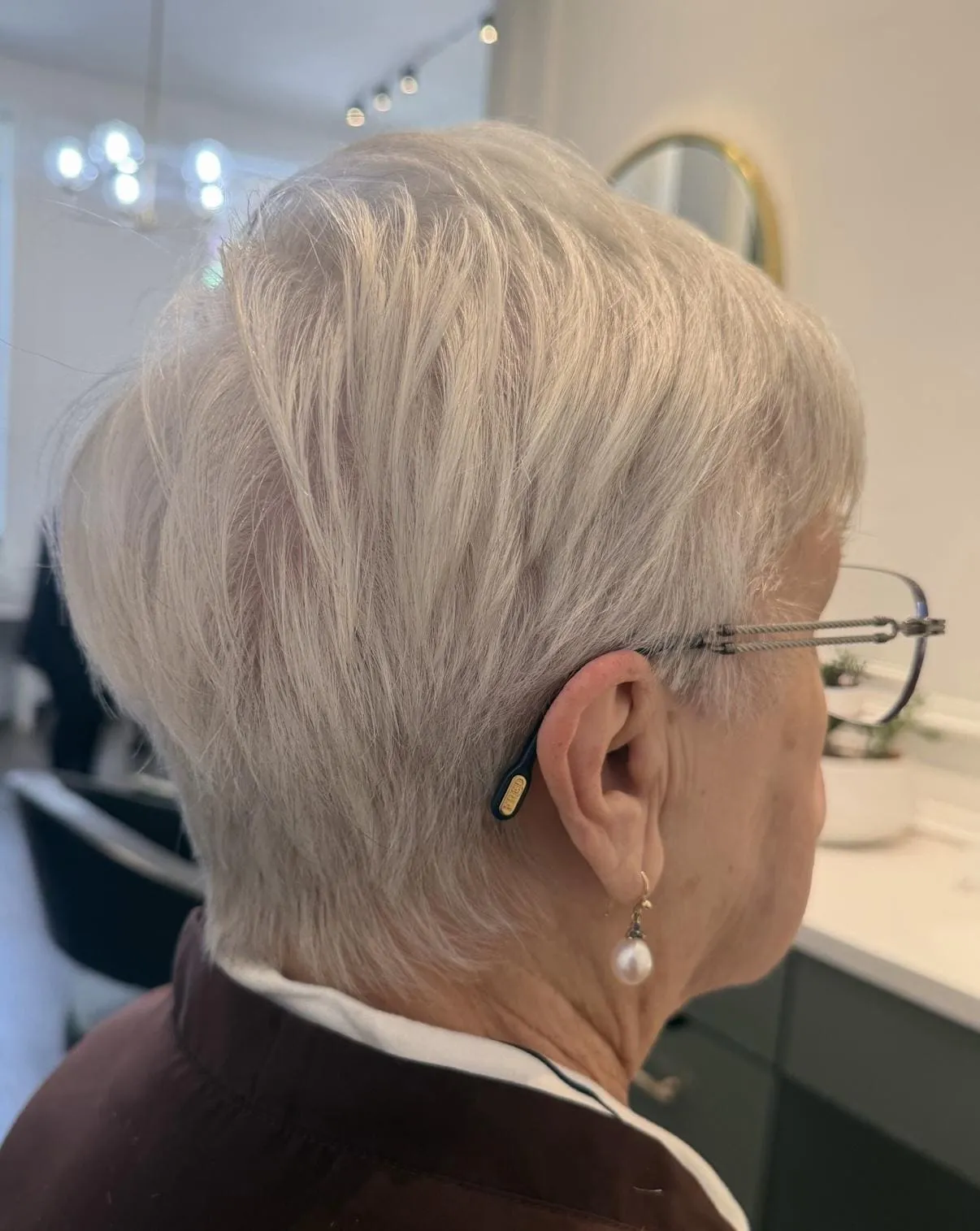 Grey Blending · Abby Haliti
“Silver, woven in.”
Strand-by-strand precision- Highlights & lowlights
- Painted strand by strand
- No hard regrowth line
- Finished with gloss
Grey blending in NYC, done by hand.
Full coverage paints over every silver strand and commits you to the regrowth line that follows. Grey blending does the opposite: fine highlights and lowlights are placed through and around your natural grey, so the silver becomes part of the color rather than the thing it hides.
At the studio in New York, the blend is painted strand by strand by our colorists, working from the same precision method behind every service here, developed under founder and lead colorist Abby Haliti. Because the work follows your own pattern of silver, roots grow in softly, and the color keeps its logic between appointments. If you are ready to move out of years of single-process dye, this is that route: the blend carries you from covered to intentionally silver without a harsh grow-out stage.
Grey blending in NYC is often confused with simple gray coverage, but the two solve different problems. Coverage paints every strand the same flat shade and asks you back on a calendar; blending treats the silver as a color to place, not a color to hide, so the studio's colorists plan the ratio of highlight to lowlight around how much grey you actually have.
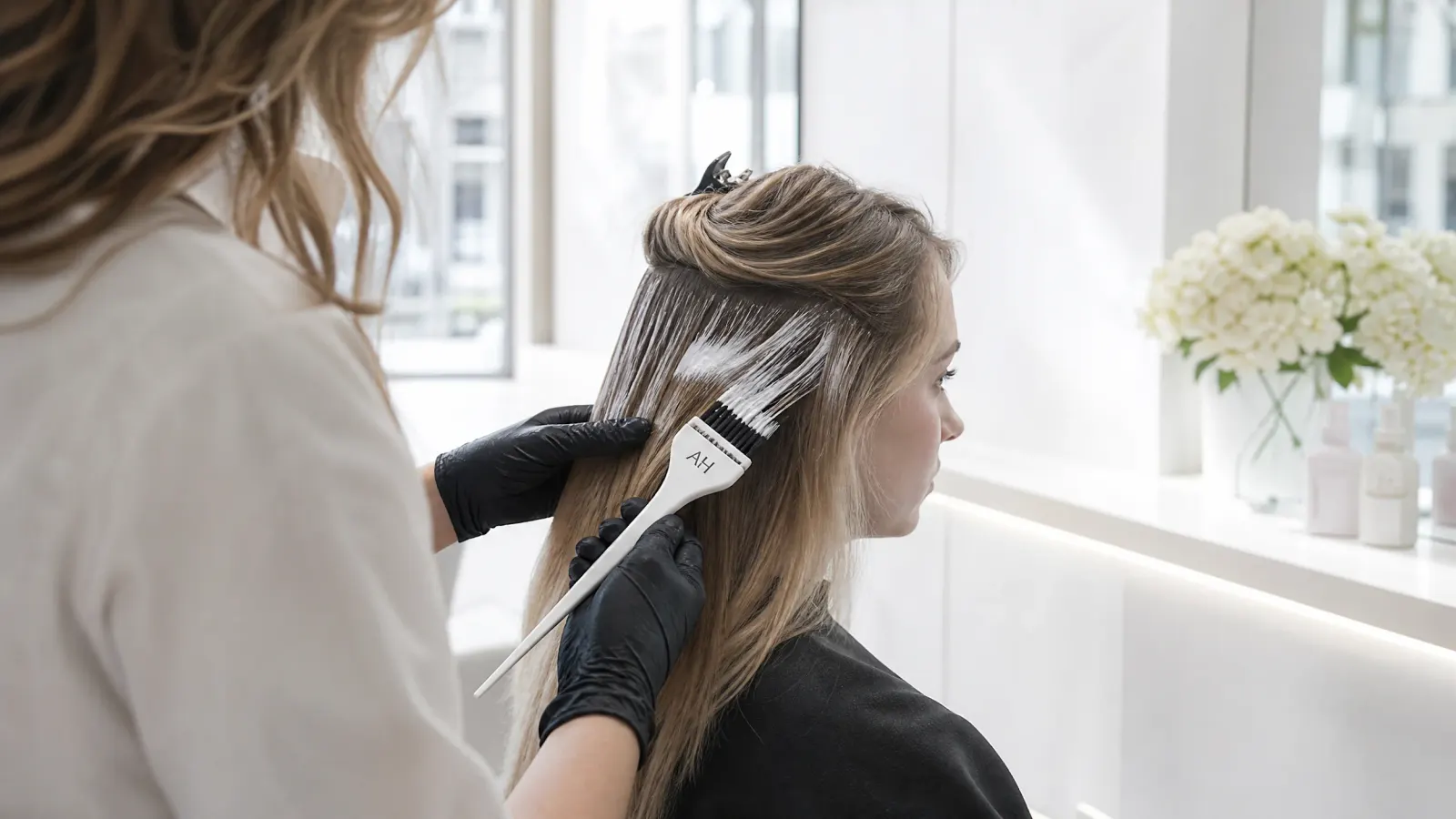 Strand-by-strand placement
Silver treated as dimension, never as damage.Abby Haliti Color Studio · Upper East Side
Blended in four deliberate steps.
Consultation
We read your silver in natural light, how much there is, where it gathers, and how it sits against your base tone, before deciding anything.
Placement map
Light and depth are planned like a composition: highlights to lift the silver you have, lowlights to anchor the base you started with.
Strand-by-strand blend
The transition is painted by hand, strand by strand, so the contrast at the root diffuses instead of forming a line.
Tone & gloss
A custom gloss knits old and new together, steers the silver warm or cool, and leaves the shine that makes grey read as deliberate.
From first silvers to fully grey.
Grey blending flatters every stage, a scattering at the temples, salt-and-pepper through the crown, or hair that has quietly become mostly silver. On dark and brunette hair, where the contrast is strongest, lowlights keep the depth you recognize while the silver reads as polish rather than neglect. On blonde hair, grey melts in almost invisibly.
Between visits, a gloss refreshes the tone, keeps silver bright rather than yellow, and restores shine without a full session. If you want sun-lit dimension alongside your blend, it pairs naturally with our hand-painted French Balayage.
The blend is planned together with the cut, so the shape frames the silver as well as the color does. That is how the whole team works at our Upper East Side hair salon, where a consultation in natural daylight comes before anything is mixed.
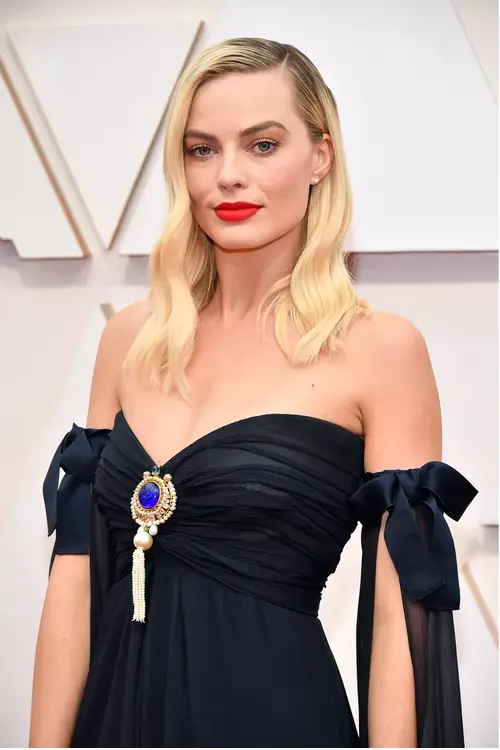 A gloss keeps the blend luminous
Grey Blending, frequently asked.
What is grey blending?
Grey blending is a coloring technique that softens the contrast between grey hair and your natural color using fine highlights and lowlights, instead of covering the grey completely. The result is dimensional, low-maintenance color with no hard regrowth line as the silver grows in.
How long does grey blending last?
Because the blend follows your natural pattern of silver, there is no line to chase, it grows out softly. How often you return depends on how much grey you have and how strong the contrast is with your base; many guests simply refresh with a gloss between full appointments. We map your cadence at the consultation.
How much does grey blending usually cost?
It depends on how much silver you have, your length, and whether we are also correcting old color. We quote precisely, in person, at a consultation at 130 E 65th Street, never a flat menu price for work this individual.
At what age should you start grey blending?
There is no right age, there is a right moment. Grey blending makes sense when the regrowth between appointments starts to bother you, or when you want to stop covering and let the silver show on your terms. The ratio of grey to pigmented hair matters far more than the number of birthdays.
Is grey blending worth it?
If you want fewer salon visits, a soft grow-out, and grey that looks intentional, yes, that is exactly what blending buys you. If you want every silver strand hidden, honest answer: you want single-process coverage instead, and we will tell you so at the consultation.
Does grey blending work on dark hair?
Yes, dark hair is where blending earns its keep, because the contrast between silver and a deep base is most visible. Lowlights preserve the richness of your natural brunette while highlights carry the grey, so the overall effect reads as deliberate dimension rather than scattered roots.
Is grey blending better than full coverage color?
Better depends on what you want. Full coverage commits you to a root touch-up on a fixed calendar, since every new inch of silver shows as a line. Grey blending works with the silver instead of erasing it, so the grow-out is soft and the schedule is looser. If you want zero visible grey between visits, coverage is the more direct route, and our colorists will tell you that honestly at the consultation.
Where can I get grey blending on the Upper East Side?
Abby Haliti Color Studio does grey blending at 130 E 65th Street, between Park and Lexington in Lenox Hill, by appointment Tuesday through Saturday. Every visit begins with a consultation in natural daylight, where our colorists read how much silver you have and plan the blend with your cut.
Can I blend my grey after years of coloring it?
Yes. The blend carries you from covered to intentionally silver without a harsh grow-out stage. We read the existing color in daylight first, then place highlights and lowlights to bridge old color and new silver, and a gloss knits them together.